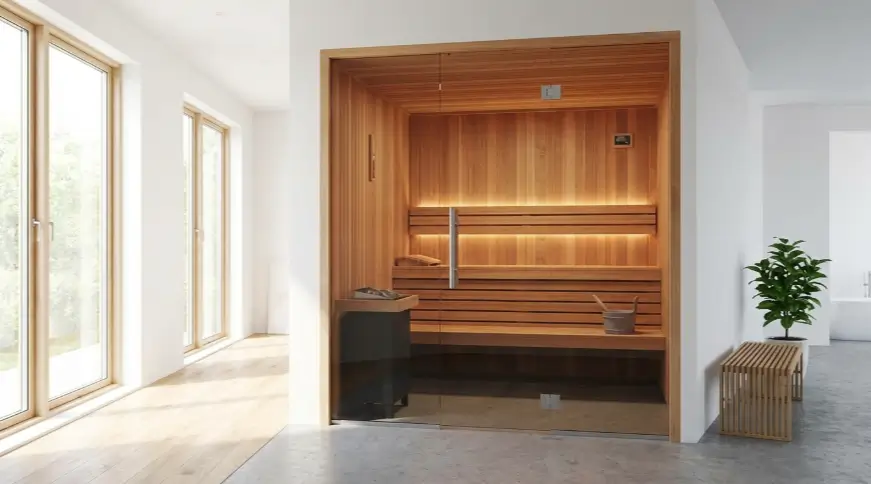
An indoor sauna rarely adds a specific, quantifiable amount to a home’s appraised value, but it can make a listing more appealing to buyers who already want one, and it costs $2,500 to $9,000 installed depending on heater type and electrical work. Appraisers generally treat it as an amenity, similar to a wet bar or a finished bonus room, rather than a feature with its own line-item value. Anyone building one primarily as a resale strategy should expect to enjoy it as a lifestyle purchase first and a value-add second.
How Do Appraisers Actually Treat a Home Sauna?
Standard appraisal models weight square footage, bedroom and bathroom count, lot size, and comparable sales far more heavily than niche amenities. A sauna typically gets folded into a general “condition and features” adjustment rather than a specific dollar figure, the same way a wine cellar or a home theater room would. An appraiser working from recent comparable sales in the area will look for other homes with similar features to justify any upward adjustment, and in most markets there simply are not enough sauna-equipped comps to move the number meaningfully. The exception is a market segment where wellness amenities are common enough that agents and appraisers both recognize them as a selling point, which remains uncommon outside a handful of higher-end markets.
What Does a Sauna Actually Cost to Build, Start to Finish?
Cost varies substantially by heater type. A small two-person infrared cabin installed, unit plus any minor electrical work, typically runs $2,500 to $4,500, since many infrared units plug into a standard 120-volt outlet and need no new circuit. A traditional heat sauna generally costs more once a dedicated 240-volt circuit, professional installation, and a mid-size two to four person cabin are all factored in, usually landing between $5,000 and $9,000. Larger custom builds with premium wood species or a walk-in multi-person layout go well beyond that. None of these figures include ongoing electricity costs, which run modestly higher for traditional units given their higher operating temperature and longer typical session length.
How Does a Sauna Compare to Other Home Improvements as an Investment?
Kitchen and bathroom remodels consistently recoup a higher share of their cost at resale than niche wellness features, largely because they appeal to nearly every buyer rather than a specific interest group. A sauna sits closer to a swimming pool or a home theater on the value spectrum: a real draw for the right buyer, a neutral or even negative for a buyer with no interest in maintaining it. Homeowners weighing a sauna purely as an investment usually get a better return from a bathroom update, but homeowners weighing it as a purchase they will use several times a week for years get value that never shows up on a comparative market analysis at all.
Does Location Inside the Home Change the Value Case?
A sauna built into existing unused square footage, a basement corner, a garage bay, or a spare room, adds value differently than one that consumes space that could otherwise be a bedroom or office. Converting a legal bedroom into a sauna room can actually reduce a home’s marketable bedroom count, which matters more to most buyers and most appraisal formulas than the sauna itself adds back. Building into genuinely unused space avoids that tradeoff entirely and is the more defensible approach for anyone even loosely thinking about resale down the line.
See also: Liberty Peptides vs the Field: Reviewed
What Actually Attracts the Right Buyer to a Sauna-Equipped Listing?
Listing photography and description matter more than the sauna’s price tag. A well-photographed cabin with clear specs, cedar or hemlock construction, heater wattage, session capacity, reads as a finished, cared-for feature rather than a mystery box. Buyers who already want a sauna will search for one specifically, and a handful of real estate markets now let buyers filter for wellness amenities the same way they filter for a pool or a finished basement. Pricing research on comparable listings, including checking current unit pricing at retailers like SweatDecks.com to understand what a similar cabin would cost new, helps set realistic expectations for how much of the original build cost a seller can reasonably expect back.
How Do Insurance and Permits Factor Into the Value Question?
A sauna that required new electrical circuits or structural changes should generally be reflected in a homeowner’s insurance policy, since a rider covering the added fixture value protects against a claim gap if something goes wrong later. Permits pulled for the electrical work also become part of the property record in most jurisdictions, which can actually help at resale by showing a buyer’s inspector that the wiring was done to code rather than added quietly without documentation. Skipping the permit to save time or money is a common shortcut, but it can complicate a sale later if a buyer’s inspector flags unpermitted work, sometimes triggering a request to open up walls to verify the wiring before closing. Treating the permit and insurance update as part of the build cost, not an optional extra, keeps the eventual resale conversation simpler.
What Does the Research Say About Why People Keep Using Their Sauna Anyway?
Resale math aside, the reason many owners keep a sauna long after any renovation trend has passed is the routine itself. A large Finnish cohort study found lower rates of fatal cardiovascular events among men using a sauna four to seven times weekly compared with once weekly, an association that held after adjusting for other risk factors. A 2001 review in The American Journal of Medicine covered both benefits and practical risks of regular sauna bathing, and a 2023 follow-up review examined whether combining sauna use with other lifestyle habits produced additional associations. These remain population-level findings, not guarantees for any individual, but they explain why a sauna often earns its keep as a daily habit long before it factors into any resale conversation.
Frequently Asked Questions
Does an indoor sauna raise a home’s appraised value? Rarely by a specific dollar amount. Appraisers generally treat it as a feature similar to a wet bar, something that helps a listing without its own line-item value.
What does a basic indoor sauna cost installed? A small infrared cabin typically runs $2,500 to $4,500 installed. A traditional heat sauna with a dedicated circuit generally lands between $5,000 and $9,000.
Do buyers actually want a sauna when shopping for a home? Some do, especially in markets where wellness features are common, but it remains a niche preference rather than a broad expectation.
Is a sauna a better investment than a bathroom remodel? No, not for resale return. Bathroom and kitchen remodels consistently recoup a higher share of their cost since they appeal to nearly every buyer.
References
- Does the Combination of Finnish Sauna Bathing and Other Lifestyle Factors Confer Additional Health Benefits? A Review of the Evidence, Mayo Clinic Proceedings, 2023
- Benefits and risks of sauna bathing, The American Journal of Medicine, 2001
- Effects of heat and cold on health, with special reference to Finnish sauna bathing, American Journal of Physiology, 2018
By Diane Foster